News
China’s Wang Yi Visits South Korea as Seoul Pushes for Renewed Regional Dialogue
Chinese Foreign Minister Wang Yi is visiting South Korea for the first time in five years as Seoul seeks to improve relations with Beijing and restart dialogue on the Korean Peninsula.
August 19, 2026
South Korea
0 views
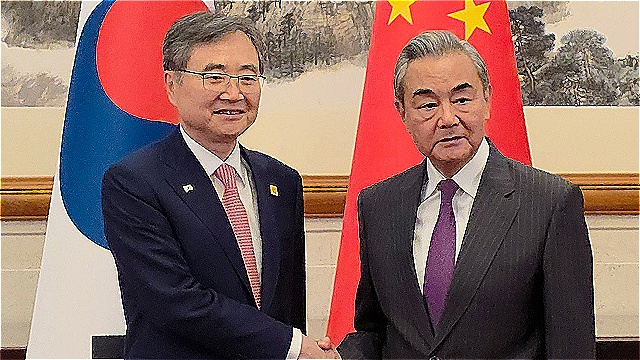
The timing of the visit is significant. South Korean President Lee Jae Myung recently called for renewed dialogue aimed at replacing the armistice that has governed relations on the Korean Peninsula since the Korean War ended in 1953. Lee has advocated peaceful coexistence with North Korea and proposed discussions involving the peninsula's nuclear issue. North Korea, however, has continued to reject Seoul's engagement efforts and has maintained a hardened position toward South Korea. China's role is particularly important because Beijing remains one of North Korea's most influential diplomatic and economic partners. China has also strengthened high-level contacts with Pyongyang in recent months, making Seoul increasingly interested in whether Beijing can contribute to reducing tensions on the Korean Peninsula.
The visit also comes as South Korea manages its relationship with the United States. Seoul continues to maintain its alliance with Washington while discussing greater independent defense capabilities. At the same time, U.S. and South Korean forces are conducting the annual Ulchi Freedom Shield exercises, although the United States is considering a reduction in the scale of the drills. For China and South Korea, improving bilateral relations also has an important economic dimension. The two governments are working toward restoring exchanges after several years of strained relations. Issues expected to receive attention include economic cooperation, cultural exchanges and the next stage of negotiations on the bilateral free-trade agreement. The upcoming Asia-Pacific Economic Cooperation (APEC) summit in Shenzhen in November provides another reason for the two countries to strengthen communication. The current diplomatic meetings are expected to help prepare for further high-level exchanges between Seoul and Beijing ahead of the summit.
The broader significance extends beyond China and South Korea. East Asia is experiencing a complicated strategic environment involving China, the United States, Japan, North Korea and Russia. Any improvement in communication between Seoul and Beijing could create additional opportunities for managing tensions on the Korean Peninsula and addressing wider regional security concerns. Whether the current diplomatic momentum develops into a lasting improvement in China–South Korea relations remains uncertain. However, Wang Yi's visit represents an important attempt by both sides to restore high-level communication and establish a more stable relationship at a time of considerable geopolitical uncertainty in Asia.
About this discovery
Category
News
Continent
Asia
Country
South Korea